Your phone suddenly shows “No Service.” No bars, no texts, no calls, nothing. You figure you’re in a dead zone and shrug it off.
A few hours later, you can’t log into your email, and then your bank sends an alert about a login you don’t recognize. What just happened?
This is how SIM swapping works, and it’s one of the sneakiest forms of account takeover out there, because the criminal never has to guess your password at all.
The FBI’s Internet Crime Complaint Center logged 971 SIM swapping complaints in 2025, totaling more than $17 million in reported losses across the country, and that’s likely only a fraction of what actually happened.
A strong password used to feel like enough. Unfortunately, it isn’t anymore. If a criminal controls your phone number, they can control almost everything connected to it.
Below, we’ll explore how SIM swapping works, why your phone number has become such a hot target, and what you can do to help protect yourself before it happens to you.
What Is a SIM Swap Scam?
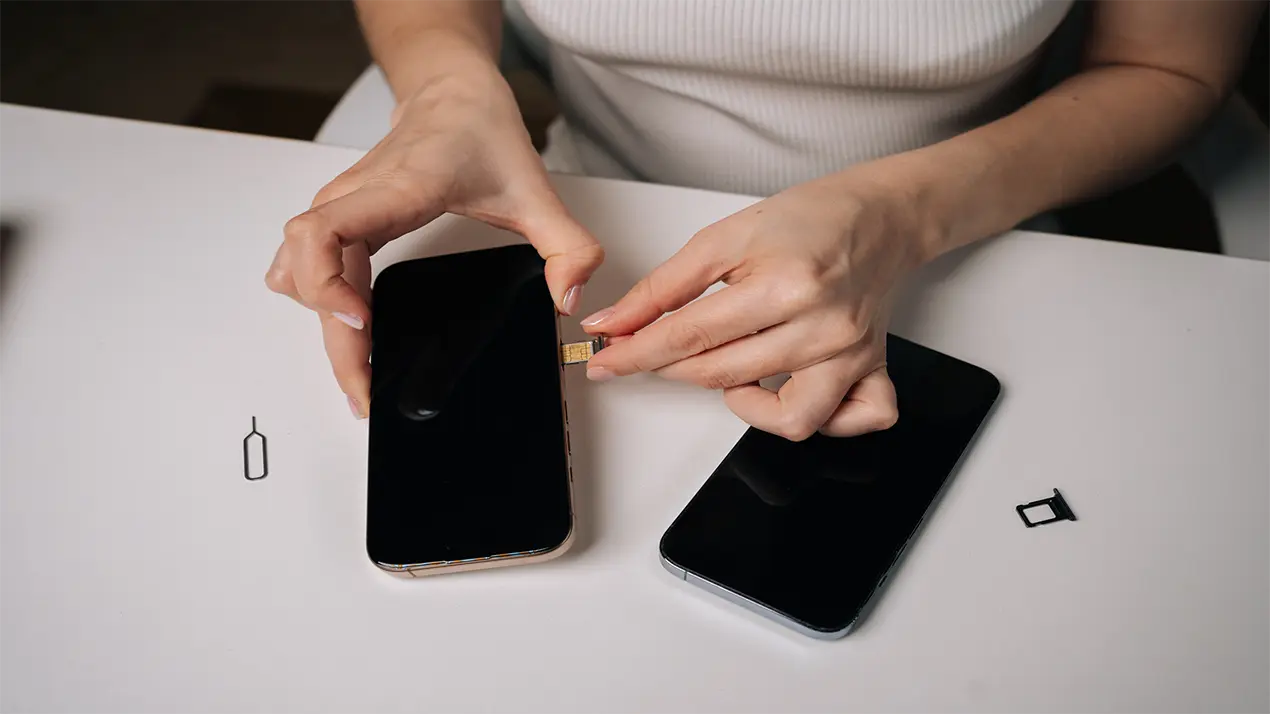
A SIM swap scam, also known as SIM hijacking or a port-out scam, happens when a criminal convinces your mobile carrier to move your phone number onto a SIM card they control. Every cell phone relies on a small chip called a SIM card to connect to your carrier’s network and confirm which number belongs to you.
When someone else controls that connection, your calls, texts, and data start going straight to their device instead of yours. The criminal doesn’t need to steal your physical phone or break through any encryption. They just need to talk their way past your carrier, which makes this form of mobile carrier fraud dangerously easy to pull off.
How SIM Swapping Works, Step by Step
SIM swapping isn’t random. It typically follows four predictable stages, and each one sets up the next.
Step 1: Gathering Your Personal Information
Before a criminal can convincingly pretend to be you, they need a few key details: your name, birthdate, address, and account information. They gather this through data breaches, phishing texts and emails, oversharing on social media, or old leaked data. The more they collect, the more convincing they sound.
Step 2: Impersonating You to Your Carrier
Next, the criminal contacts your carrier’s customer service line and poses as you, often claiming their phone was lost or damaged and requesting a replacement SIM. Using the details they’ve gathered, they try to answer security questions convincingly enough to pass verification. In some cases, they bribe or work with an employee on the inside instead.
Step 3: Porting the Number
If the carrier believes the scammer’s story (or is an “inside man”), your number gets transferred, or “ported,” to a new SIM card the bad actor controls. Your phone typically loses signal within minutes. You might see “No Service” or “SOS Only” with no clear explanation, and that sudden silence is often the first clue something is wrong.
Step 4: Bypassing Two Factor Authentication
With your number in their hands, the criminal requests password resets on your email, banking, and cryptocurrency accounts. Since so many accounts rely on SMS based two factor authentication, those verification codes get sent straight to the phone they control instead of yours. This two factor authentication bypass is exactly why SIM swapping fraud has become such an effective form of account takeover.
Why Criminals Target Your Phone Number
Think about how many accounts are tied to your phone number right now: email, online banking, cryptocurrency wallets, social media, and shopping apps with your card saved. Your number acts almost like a master key.
Once a criminal controls it, they can request password resets across dozens of accounts without ever needing your original login. That’s the appeal of phone number hijacking: criminals don’t have to guess or crack a password when they can simply reset it instead.
Cryptocurrency accounts are an especially popular target, since transactions are nearly impossible to reverse once funds move.
Warning Signs You May Be a Victim of SIM Swapping
Your phone won’t announce that it’s been hijacked, so you have to catch the signals yourself. A sudden, unexplained loss of cell service is the biggest one, especially when calls and texts stop working with no obvious cause.
You might also get locked out of accounts you use daily, or notice alerts about password changes, new logins, or account updates you never made. Some victims get a message from their carrier confirming a new SIM or device was just activated on their line. If any of this sounds familiar, don’t wait to act.
Related: Understanding Data Privacy: Keeping Your Data Secure
How to Help Protect Yourself From SIM Swapping
Taking a few proactive steps can make it significantly harder for a criminal to pull off a SIM swap against you. Here is where to start.
Secure Your Mobile Carrier Account
Start with your mobile phone carrier. Most providers let you set up a PIN or passcode required before anyone can make changes to your account, including a SIM swap. Ask whether they offer a port freeze or number lock feature as well. Port freezing or number lock features add another barrier between your number and anyone trying to move it. Most importantly, never share account details over the phone unless you placed the call.
Strengthen Your Authentication Methods
SMS based two factor authentication feels convenient, but it’s also the exact weakness criminals exploit during a SIM swap. Whenever possible, switch to an authenticator app or a physical security key instead.
Authenticator apps generate codes directly on your device rather than through your phone number, so even if your SIM card gets hijacked, your accounts stay locked down.
Limit Personal Information Exposure
The less a criminal can learn about you, the harder it is to impersonate you convincingly. Be mindful of what you share on social media, especially your birthdate, address, or phone number. Treat unexpected emails and texts asking for personal details with suspicion, even when they look official. Use unique, strong passwords across your accounts so one breach doesn’t put everything else at risk.
Monitor Your Identity and Accounts
Keeping an eye on your financial accounts and personal data gives you a head start if something goes wrong. Real time alerts for possible suspicious activity mean you’re not the last to find out your information’s been compromised. The sooner you catch a problem, the sooner you can act.
What to Do If You Think You’ve Been SIM Swapped
If you suspect you’ve been targeted, move quickly. Contact your mobile carrier right away, ideally in person since your phone may not have service, and ask them to restore your number.
Once you’re back online, change passwords on your most important accounts, starting with email and banking, from a device you know is secure. Reach out to your bank and other financial institutions to flag possible suspicious activity and watch for unauthorized transactions as well.
File a report with the FTC at IdentityTheft.gov, and file a police report too if you lost money. You may also want to place a fraud alert or freeze on your credit as an extra layer of protection.
How IdentityIQ® Can Help You Stay Ahead of SIM Swapping Scams
You can’t control every decision a call center employee makes, but you can build a stronger safety net around your identity. IdentityIQ® gives you real time alerts when we detect possible suspicious activity across your personal and financial data, so you’re not left wondering what’s happening to your accounts.
Our dark web monitoring works to help detect if your personal information has already been exposed, giving you a chance to act before a criminal builds a full profile on you. If the worst does happen, you get a dedicated U.S.-based restoration specialist to guide you through recovery, backed by identity theft insurance coverage up to $1 million (underwritten by AIG).¹
We also include Bitdefender® Total Security with select plans, adding another layer of protection against the malware and phishing attempts criminals often use to gather your information in the first place.
FAQs About SIM Swapping
Here are answers to the most common questions about SIM swap scams, how to spot them, and what to do if you’ve been targeted.
What is a SIM swap scam?
A SIM swap scam happens when a criminal convinces your mobile carrier to transfer your phone number to a SIM card they control, giving them access to your calls, texts, and verification codes.
How do I know if I’ve been SIM swapped?
The clearest sign is a sudden, unexplained loss of cell service, along with account lockouts or password reset alerts you didn’t request.
Can SIM swapping happen without losing my phone?
Yes. Criminals target your carrier account, not your device, so a swap can happen even if your phone never leaves your hand.
Is SIM swapping the same as phishing?
Not quite. Phishing tricks you into handing over information directly, while SIM swapping uses that stolen information to trick your carrier instead.
What should I do first if I suspect a SIM swap?
Contact your mobile carrier immediately to regain control of your number, then change your passwords and monitor your accounts closely.
Don’t Let Your Phone Number Become Your Weakest Link
SIM swapping proves that a strong password alone isn’t the safety net it used to be. The good news is you’re not powerless here. Locking down your carrier account, moving away from SMS based codes, and keeping a closer watch on your personal information can all help protect your identity before a criminal even gets started.
You don’t have to manage all of it alone, either. Identity theft protection from IdentityIQ gives you the tools, alerts, and support to help you stay a step ahead of scammers targeting your phone number. Get started with IdentityIQ today, and take control of your identity before someone else tries to.
H2- Related Gaming Account Articles
SIM swapping is a threat that can affect your gaming accounts just as easily as your financial ones. These guides cover additional gaming security topics worth knowing.
- The Online Gamer’s Guide to Strong Password
- Gaming Account Breaches: How to Know If Your Data Has Been Compromised
- Gaming Payment Fraud: Protecting Your Credit Card From Account Takeover
¹ Identity theft insurance underwritten by AIG. Coverage terms, conditions, and exclusions apply. For full details, visit identityiq.com.